This story was updated at 5:20 p.m. on Dec. 1, 2025.
After decades of planning and four years of work, construction at the Chimney Hollow Reservoir, just west of Loveland, is now on pause. That’s after Northern Water, the operator of the project, discovered uranium in the granite used to build the dam.
“We determined that the source of the uranium was the granite rock at the site, which had been quarried to provide material to build the (dam) embankment,” Esther Vincent, the director of environmental services at Northern Water, said. “Meaning the embankment is now filled with these granite rocks that contain uranium.”
However, Vincent emphasized that all the water in the reservoir will go to a water treatment plant before making its way to people’s taps.
“The concern is to make sure that the [uranium] concentrations in the water that gets delivered to the treatment plants is staying within really low levels that make it manageable for these treatment plants to deal with it,” she said.
The maximum contaminant level for uranium in public drinking water set by the Environmental Protection Agency is 30 micrograms per liter of water. Uranium is naturally occurring; it is also naturally radioactive. However, experts say the main danger of uranium in drinking water has to do with chemical exposure, because uranium is also a heavy metal and exhibits the typical toxicities of many heavy metals, such as lead. The EPA says everyone comes into contact with some level of uranium, but exposure to high doses or over long periods of time can lead to kidney damage, increased risk for high blood pressure, and reproductive problems. The agency warns that consuming more than the allowed limit of uranium consistently increases the risk of negative health effects.
The Chimney Hollow Reservoir is expected to become the largest dam built in the U.S. in more than two decades and will eventually serve over one million people along the Front Range, including residents of Broomfield, Erie, Fort Lupton, Greeley, Lafayette, Longmont, Louisville, Loveland, and Superior.
The $600 million project was designed to store up to 90,000 acre-feet of water to help meet the needs of Northern Colorado’s growing population. Most of that supply will be drawn from the Upper Colorado River. Northern Water says it has spent $90 million in mitigating impacts on the Western Slope, including turning off pumps when temperatures get too high for fish and only taking water out of the river during wet years.
But earlier this year, Northern Water reported that they detected uranium leaching into the small amount of water currently in the reservoir. Vincent said it took “a solid year and a half” for the utility to realize there was an issue.
While there are no mines in Colorado actively producing uranium, the Sunday Complex in San Miguel County recently resumed uranium mining operations after shutting down in the 1980s when demand for uranium dropped. Western Uranium & Vanadium, a mining and production company located in Colorado and the owner of the Sunday Complex, began rehabilitating the mine in 2020.
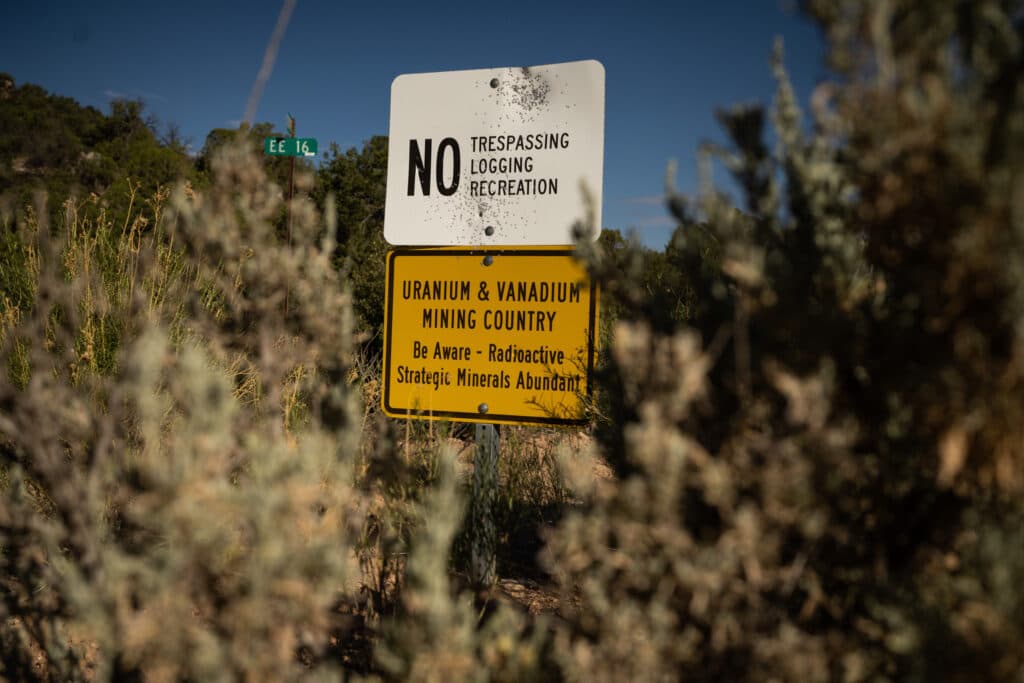
And experts say "abundant" natural uranium reserves exist throughout the state — many of which have yet to be discovered. Today, uranium is the primary fuel for nuclear power plants to generate electricity as well as to produce nuclear weapons. Some of the uranium from the Sunday Complex mine was used for atomic bombs, according to the Denver Gazette, during the height of the mine's operations in the mid-20th century.
According to Vincent, it’s still unclear how much uranium is present in the dam at Chimney Hollow Reservoir. She says Northern Water has been conducting “multiple investigations” to determine how much uranium could continue leaching from the surrounding rock over time. Because of that ongoing work, the timeline for completing the reservoir — and for when communities along the Front Range may begin receiving water — is now uncertain.
“We had initially thought that we would start moving water into the reservoir in early November, but we’ve delayed that,” she said. “It’ll be sometime in the new year, but we don’t have a firm date yet.”
Even with the multiple delays to the project and many unknowns, Vincent says, “There will be no impacts to communities in terms of the drinking water that they're going to receive.”
Northern Water says the reservoir remains essential for meeting future demand along the Front Range. But until investigators understand how much uranium may leach from the dam’s rock over time, the timing of the project’s finish line remains uncertain.
Editor's Note: This story was updated to clarify the status of uranium mining in Colorado. It has also been updated to better describe the health risks and effects of uranium.